Materiality
We review our material environmental, social and governance (ESG) topics regularly against industry trends, stakeholder feedback and our business objectives. Our material ESG topics were assessed and prioritised based on their potential impacts on the environment, society and responsible business practices. These topics are also aligned with the United Nations Sustainable Development Goals.
Materiality Assessment
Materiality assessment is essential for identifying key ESG topics that are most relevant and critical to our business and stakeholders. We adopt a structured four-step approach to determine and prioritise material ESG topics that have the most significant impacts on the environment, society, stakeholders and our business operations. Our assessment process considers industry best practices, peer benchmarking and review of emerging trends shaping Singapore’s built environment sector. We actively engage with both internal and external stakeholders to ensure that key ESG topics remain aligned with their expectations. These material ESG topics form the cornerstone of our annual sustainability reporting and strategic priorities going forward.
Since the beginning of our sustainability journey more than a decade ago, we have regularly reviewed our material topics to ensure they remain relevant to our business and stakeholders. Our first materiality workshop was conducted in 2012, followed by an expanded assessment in 2015 when we broadened our reporting scope to include hotel operations in Singapore.
Recognising the importance of stakeholder perspectives, we conducted a comprehensive stakeholder engagement survey in 2019, facilitated by an independent consultant to identify the ESG topics most relevant to our key stakeholder groups. In 2024, we refreshed our material ESG topics together with SingLand in preparation for ISSB-aligned reporting. This exercise identified “Responsible Sourcing and Supply Chain” as a new material topic. We also updated “Data Protection” to “Cybersecurity and Data Privacy” to reflect the Group’s strengthened focus on digital resilience and cybersecurity.
Materiality Assessment Process

In 2025, as part of our continued efforts to align with GRI and ISSB Standards, UOL conducted a materiality assessment survey to evaluate and prioritise 10 material ESG topics based on both impact and financial materiality. This survey was undertaken jointly with SingLand and engaged more than 200 internal and external stakeholders across contractors, non-profit community groups, homebuyers, hotel guests, tenants, shoppers, investors, regulators and employees. The results were presented to and validated by the Group SCC and the Board of Directors, ensuring that the prioritised material topics reflect stakeholder perspectives and remain aligned with the Group’s strategic direction. In the same year, we also refined the material topic “Local Communities” to “Community Stewardship” to reinforce the expanded scope and depth of our community engagement efforts.
Material ESG Topics

Developing Better: Managing Climate Risk and Building Resiliency
-
Climate Change
- Greenhouse Gas Emissions
- Energy
- Water
- Waste





Building Good: Empowering People and Communities
- Health and Safety
- Employee Development and Well-being
- Diversity, Equity and Inclusion
- Product and Service Quality
- Community Stewardship*






Doing Right: Conducting Business Profitably and Responsibly
- Anti-corruption and Ethical Business Practices
- Cybersecurity and Data Privacy
- Responsible Sourcing and Supply Chain
- Economic Performance


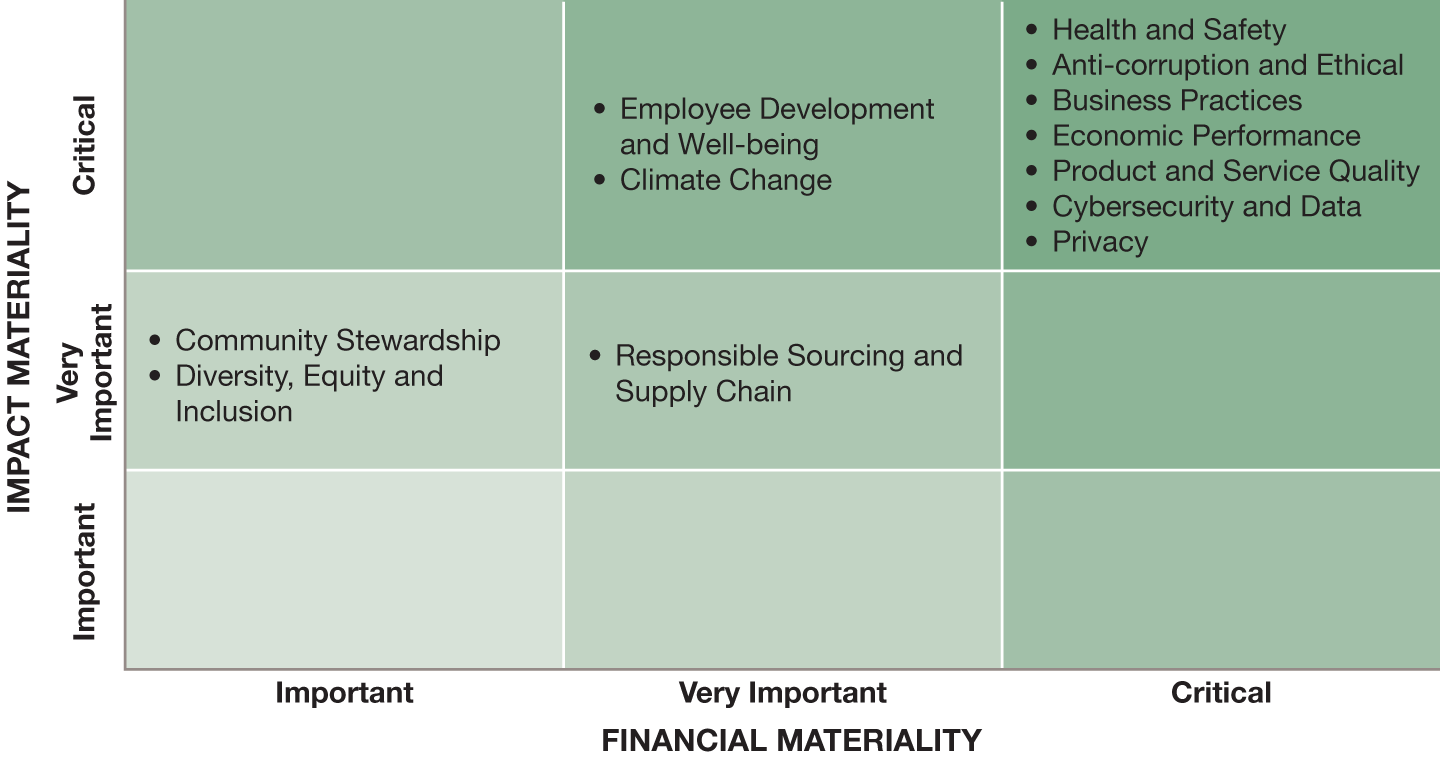
The materiality assessment exercise, which incorporated the Group’s stakeholders’ perspectives on both impact and financial materiality, shaped the Materiality Matrix and prioritisation of the Group’s material topics. Several topics were reaffirmed as top priorities for the Group, namely Health and Safety, Anti-corruption and Ethical Business Practices, Economic Performance, Product and Service Quality and Cybersecurity and Data Privacy. These priority areas directly shape our business strategy and operations by guiding how we meet performance expectations, safeguard operational integrity and maintain trust with customers, business partners and regulators. They also inform our risk management priorities, particularly in areas where non-compliance or operational disruptions could materially affect our brand and long-term value creation.
Materiality Matrix
*Renamed from "Local Communities"